Rent & Collections
Online payments through the resident portal, firm follow-up on delinquencies, and deposits reconciled monthly.

Get a free Rent Cap Audit: your legal max rent for every unit, and our all in fee in writing.
Free, no obligation. Or call (818) 319-2900

Free, and yours to keep whether or not you hire us.
Takes 30 seconds. The principal reviews every one personally.
What is a rent cap? The legal limit on how much you can raise rent on an existing tenant each year.
“Excellent service managing my 4 unit, would recommend!”
“Encore Realty made selling our retail center easy. We had the quickest sale and sold above asking price! Great communication and excellent service throughout. Highly recommend!”
“Encore Realty was fantastic to work with! They helped us find the perfect retail space to lease and made the entire process smooth and stress-free. Highly recommend their team!”
30 days' notice. No long term contract and no cancellation fee.
No setup, admin, or vendor markup fees. Every cost in writing first.
Switching managers? We collect the leases, deposits, and files, and move your tenants to the new portal.
Rent caps are a residential question. For industrial and commercial buildings we start with a proposal: scope, pricing, and a full fee schedule before you commit.
Scope and a written fee schedule for your building. The principal reviews every one personally.
Full-service commercial property management covers rent collection and owner reporting, vendor and work-order management, lease administration and renewals, tenant screening, preventative maintenance, after-hours emergency response, and California rent-regulation compliance. The quoted percentage is rarely what decides your annual cost — vendor markups, setup fees, and administrative fees often exceed the difference between two firms' headline rates, which is why Encore charges none of them and provides a full fee schedule up front. Our fee is charged on rent actually collected, so a vacant unit costs us alongside you. Encore manages roughly half a million square feet of industrial space in the Bell and Vernon corridor, including a 307,101 square foot distribution center and a 25,194 square foot cold storage facility, alongside multifamily and student housing across Los Angeles County. Every account is run by a principal rather than a call center.
Online payments through the resident portal, firm follow-up on delinquencies, and deposits reconciled monthly.
A tracked work-order system with vetted vendors. Tenants get responses fast; owners see every ticket and every invoice.
Marketing, showings, screening, and renewals handled in-house, so vacancies close quickly and rents stay at market.
Monthly statements with income, expenses, and open items in plain language. You always know where the property stands.
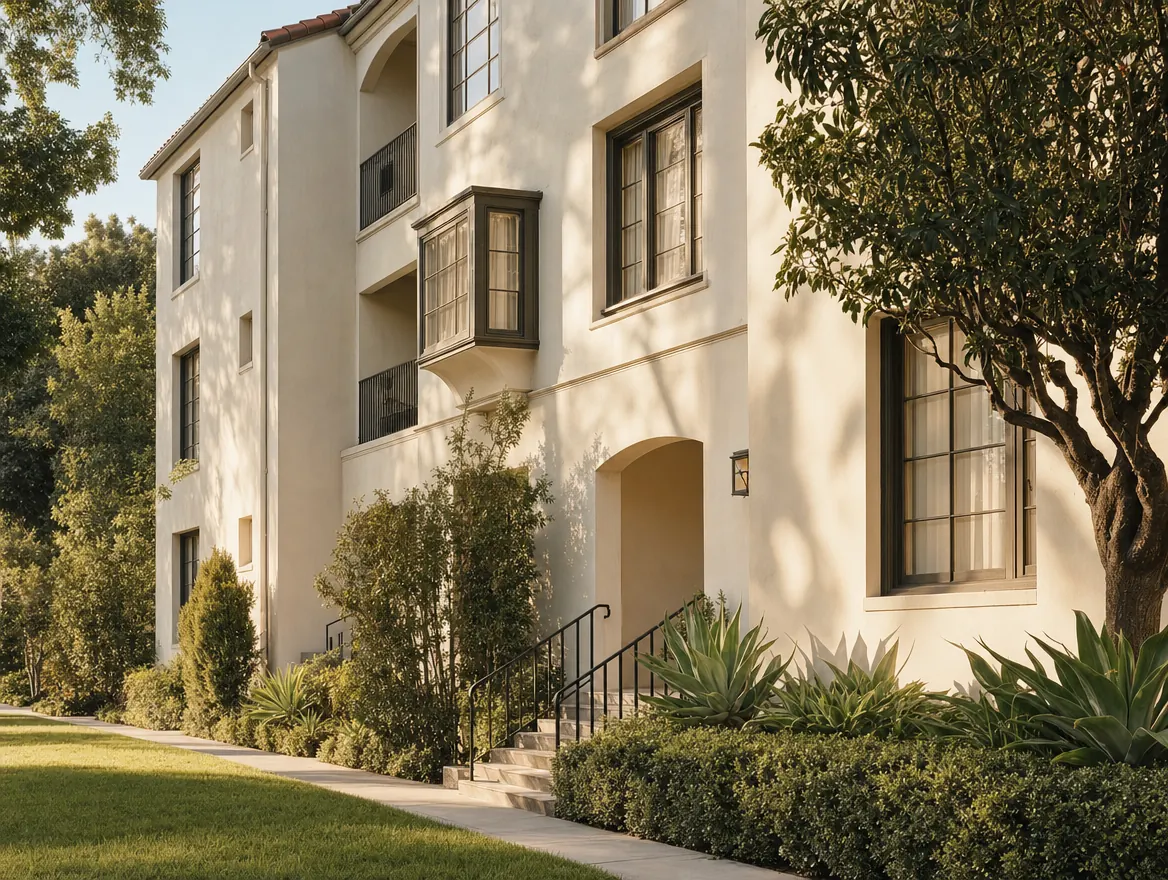
A rent cap is the legal limit on how much you can raise rent on an existing tenant each year. Which cap applies depends on the parcel, not the mailing address: the City of Los Angeles, cities with their own code such as Glendale and Burbank, unincorporated Los Angeles County, and California's statewide Tenant Protection Act all set different limits, and some properties are exempt. We confirm the governing jurisdiction from the Assessor's parcel number before calculating anything. This is general information, not legal advice.
Yes. Send the property address and we confirm which rent cap governs the parcel, calculate the legal maximum increase for each unit, check your current notices, and give you a written fee schedule. There is no charge and no obligation to hire us. If you do, the management agreement can be cancelled anytime with 30 days notice and no cancellation fee. For industrial and commercial buildings we prepare a free management proposal with a written fee schedule instead.
Pricing depends on property type, size, and scope of service. The headline percentage is rarely the whole cost, so we provide a full fee schedule up front covering the base management fee and leasing and renewal fees. Encore applies no markup to vendor invoices, no setup fee, and no administrative fee. Two firms can quote the same percentage and deliver very different economics, which is why we recommend comparing total annual cost rather than the quoted rate. We break down every fee in what property management actually costs in Los Angeles.
We manage property across Los Angeles County, with concentrations in Glassell Park and Atwater Village, Glendale, Burbank, Eagle Rock, La Crescenta, Studio City, Sun Valley, and Van Nuys. Our industrial management portfolio is centered in the Bell and Vernon corridor.
Both. We manage industrial buildings including distribution centers and cold storage, commercial and multi tenant office property, and multifamily residential. Our industrial portfolio in the Bell and Vernon corridor includes a 307,101 square foot distribution center and a 25,194 square foot cold storage facility.
Rent collection and owner reporting, vendor management and work order tracking, lease administration and renewals, tenant screening and leasing of vacant space, preventative maintenance scheduling, after hours emergency response, and California rent regulation compliance. You receive monthly owner statements and a direct line to the principal rather than a call center.
Start by checking the termination clause in your current management agreement, which commonly requires written notice. From there a competent incoming manager handles the transition: tenant notifications, transfer of leases and records, security deposit accounting, vendor introductions, and a full property condition review. Most owners find the process less disruptive than they expect.
Yes. Encore Realty Group Inc. is licensed by the California Department of Real Estate, license number 02261428. Our office is at 2702 Media Center Drive, Suite 100, Los Angeles, CA 90065.
Ask for certificates before you sign anything. A management company should carry general liability and errors and omissions coverage at minimum, and you should confirm whether your own policy needs to name the manager, or whether the manager names you as an additional insured. Owners regularly ask us for our certificates during the review of the management agreement, and we send them as a matter of course rather than on request. If a firm hesitates to produce them, treat that as the answer.
They are two separate documents and they are easy to confuse. The management agreement sets the scope, term, fee, and termination terms for managing the property. The agency relationship disclosure is a California form confirming who a licensee represents in a transaction, and it accompanies the agreement rather than replacing it. Signing the disclosure does not list your property for sale or commit you to a sale. This is the single most common point of confusion we see during onboarding, including with experienced owners, so ask your manager to walk you through both documents before you sign either.
Paying them, usually yes. Filing your returns, no. We can pay property tax and mortgage installments from the operating account, obtain insurance quotes, and keep utility accounts current on autopay so nothing lapses. We do not prepare or file annual tax returns, and no property manager should. That is your accountant's work, and we provide the year-end statements they need for it.
It depends on how your leases allocate them, and that is the first thing to check. Where the owner carries a utility, we set the account to autopay and reconcile it monthly so a missed bill never becomes a service interruption or a habitability problem. Where the tenant carries it, we verify the transfer at move-in and again at move-out. Ask any prospective manager how many owner-paid utility accounts they currently run and how they confirm each one is current, because this is a routine and expensive failure point.
You do, above a spending threshold written into your management agreement. Below it, we act so a small problem does not wait on an email. Above it, we bring you a scope and a bid before work starts, and for larger items we bring more than one. You are free to use your own contractor, and several of our owners do. What matters is agreeing the threshold and the bid process up front rather than discovering them on an invoice.
Through a monthly owner statement that reconciles scheduled rent against collected rent, unit by unit, alongside a resident portal that timestamps every payment. The distinction matters: a manager reporting on scheduled rent is telling you what was owed, not what arrived. Ask for the collected figure, the delinquency detail behind it, and what is being done about each item. You should also receive leasing activity, move-ins, move-outs, and renewals in the same report rather than having to ask.
Rent notices go out 30 or 90 days ahead. Get the audit before your window closes.